


File Your Oahu Homeowner Exemption by September 30, 2026
A simple filing could help lower your Oahu property tax bill for years to come.

Did you know that you could save hundreds of dollars a year on your property taxes with one simple filing? That’s the power of Oahu’s homeowner exemption—a tax benefit that reduces the assessed value of your home and can lower your annual property tax bill.
If you purchased a new home or otherwise became eligible for the exemption this year, be sure to file your claim by September 30, 2026. Claims filed by this deadline will apply to the 2027–2028 tax year, which begins July 1, 2027.
Key Takeaway
September 30, 2026 is the deadline to file a homeowner exemption claim that will apply to the 2027–2028 tax year. If you are a new Oahu homeowner or have become newly eligible, don't wait until the deadline to file.
When is the deadline to file a homeowner exemption on Oahu?
If you purchased a new home or became eligible for a homeowner exemption in 2026, you must file your claim by Wednesday, September 30, 2026.
The September 30 deadline is important because homeowner exemptions are effective for the tax year beginning the following July 1. A claim filed by September 30, 2026, will apply to the 2027–2028 tax year, which runs from July 1, 2027, through June 30, 2028.
What is the homeowner exemption on Oahu?
A homeowner exemption reduces the assessed value of an owner-occupied principal residence for property tax purposes.
The first home exemption law in Hawaii was enacted in 1896 by the Republic of Hawaii to provide tax relief and encourage homeownership. The original home exemption amount was $300.
Today, the exemption can provide significant savings for qualifying Oahu homeowners.
How much is the Oahu home exemption?
For the 2027–2028 tax year, the home exemption will increase to:
- $140,000 for homeowners under age 65
- $180,000 for homeowners age 65 and older
These amounts are an increase from the current $120,000 standard exemption and $160,000 exemption for homeowners 65 and older. The new amounts take effect July 1, 2027.
To qualify for the higher exemption amount, you must be 65 years old on or before June 30 preceding the tax year for which the exemption is claimed, and your date of birth must be on record with the Real Property Assessment Division.
Good to know: If you already have a homeowner exemption and your date of birth is on file, you generally do not need to reapply. Your exemption amount will automatically increase when you reach the qualifying age.
How does the homeowner exemption work?
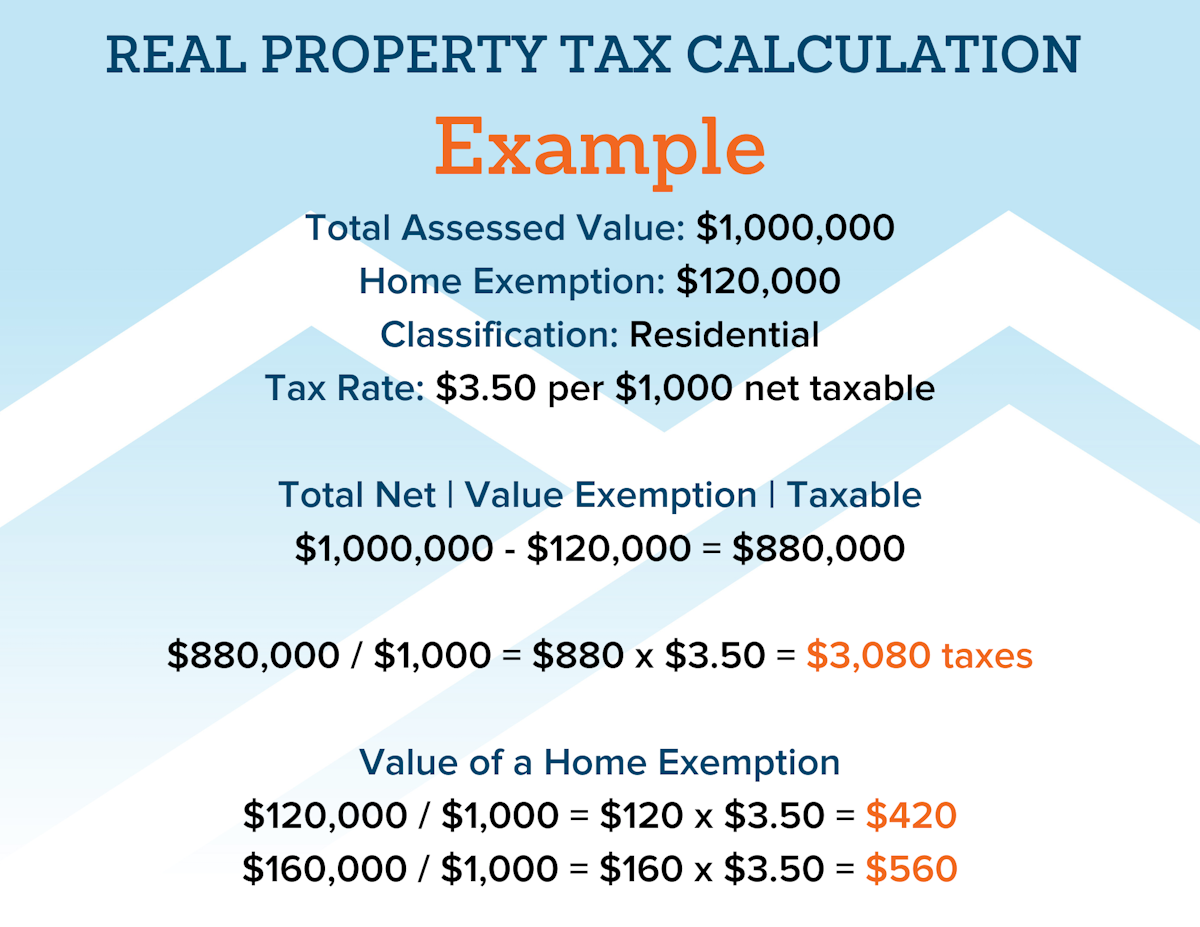
The homeowner exemption is subtracted from your property's assessed value before your taxable value is calculated.
Example
$1,000,000 assessed value
− $140,000 homeowner exemption
$860,000 taxable value
The actual amount you save depends on your property's tax classification and applicable tax rate.
Who qualifies for an Oahu homeowner exemption?
To qualify, you generally must:
- Own and occupy the property as your principal home.
- Have ownership recorded with the Hawaii Bureau of Conveyances on or before September 30 preceding the tax year for which you are claiming the exemption.
- File a homeowner exemption claim with the Real Property Assessment Division by September 30 preceding the tax year for which you are claiming the exemption.
- Meet the City's occupancy requirements. Principal-home occupancy may be demonstrated in several ways, including living in the home for more than 270 days of the calendar year.
Property held in a company, such as an LLC, may not qualify for a homeowner exemption. Certain properties held in a trust may qualify depending on the circumstances.
Do existing homeowners need to reapply?
Generally, no. If you already receive a homeowner exemption and there has been no change in ownership or use of the property, you do not need to file again each year.
However, you may need to file a new claim if you move to a different property, transfer ownership, change how the property is used or otherwise have a change that affects your eligibility. Homeowner exemptions are specific to the property and do not automatically transfer when you move.
Moving to a new home?
Your homeowner exemption does not automatically transfer to a new property. If you have recently purchased a home on Oahu, check your eligibility and file a new claim by the September 30 deadline.
Homeowner exemptions for disabled residents
Homeowners who are affected by Hansen's Disease or who are blind, deaf or totally disabled may qualify for an additional exemption of up to $25,000 of taxable value.
This exemption is separate from the regular homeowner exemption and has its own eligibility requirements and filing forms. Claims must be filed by September 30 preceding the tax year for which the exemption is claimed.
What to file: Form BFS-RPA-E-10.6 and 7 — Claim for Exemption for Homes of Hansen's Disease, Blind, Deaf or Totally Disabled.
Veterans who are 100% totally disabled due to service-related injuries may also qualify for a separate disabled veteran exemption, subject to the applicable minimum property tax and eligibility requirements.
What do I need to file for an Oahu homeowner exemption?
You can file your Oahu Home Exemption Claim online.
The City recommends filing as soon as you are eligible rather than waiting until the September 30 deadline.
Before you file, have these items handy:
- Your property's Tax Map Key (TMK) or parcel ID
- Proof of your date of birth, such as a government-issued identification document, birth certificate or other acceptable documentation
- Information about your property and ownership
The homeowner exemption is generally a one-time filing. Once approved, you do not need to refile each year unless your circumstances change.
Oahu Homeowner Exemption Checklist
☐ I own and occupy the property as my principal home.
☐ My ownership is recorded with the Bureau of Conveyances.
☐ I have my property's TMK or parcel ID.
☐ I have documentation showing my date of birth, if applicable.
☐ I will file my homeowner exemption claim by September 30, 2026.
☐ If I recently moved, I understand my exemption may need to be established for my new property.
Frequently Asked Questions
When is the Oahu homeowner exemption deadline in 2026?
The deadline is September 30, 2026. Claims filed by this date will apply to the 2027–2028 tax year beginning July 1, 2027.
How much is the Oahu homeowner exemption for 2027–2028?
The standard exemption will be $140,000. Homeowners age 65 and older may qualify for an exemption of $180,000, subject to the City's eligibility requirements.
Do I have to file for the homeowner exemption every year?
Generally, no. Once approved, the exemption continues as long as you remain eligible. You may need to file again if you move, transfer ownership or experience another change that affects your eligibility.
Does the homeowner exemption automatically transfer when I move?
No. The exemption is tied to the qualifying property. If you purchase a new primary residence, you should check your eligibility and file a new claim.
Where can I file my Oahu homeowner exemption?
You can file through the City and County of Honolulu Real Property Assessment Division.
Don't Miss the September 30 Deadline
If you're a new Oahu homeowner or otherwise need to establish your homeowner exemption, take care of your filing before September 30, 2026.
File Your Homeowner ExemptionIf you're unsure whether you qualify or how a move, purchase or change in ownership could affect your exemption, contact your Locations real estate agent for guidance.
Disclaimer: This article is provided for general informational purposes only and is not tax, legal or financial advice. Property tax rules, exemption amounts and eligibility requirements are subject to change. For the most current information and to determine your eligibility, please consult the City and County of Honolulu Real Property Assessment Division or a qualified tax professional.